PASSAGE: Scaling Scene-Aligned Motion Learning for Perceptive Humanoid Traversal in Cluttered Environments
1Galbot ·
2Shanghai Qi Zhi Institute ·
3ShanghaiTech University ·
4Zhongguancun Academy
5Shanghai Jiao Tong University ·
6National University of Singapore ·
7Tsinghua University ·
8Peking University
*Equal contribution ·
†Corresponding author
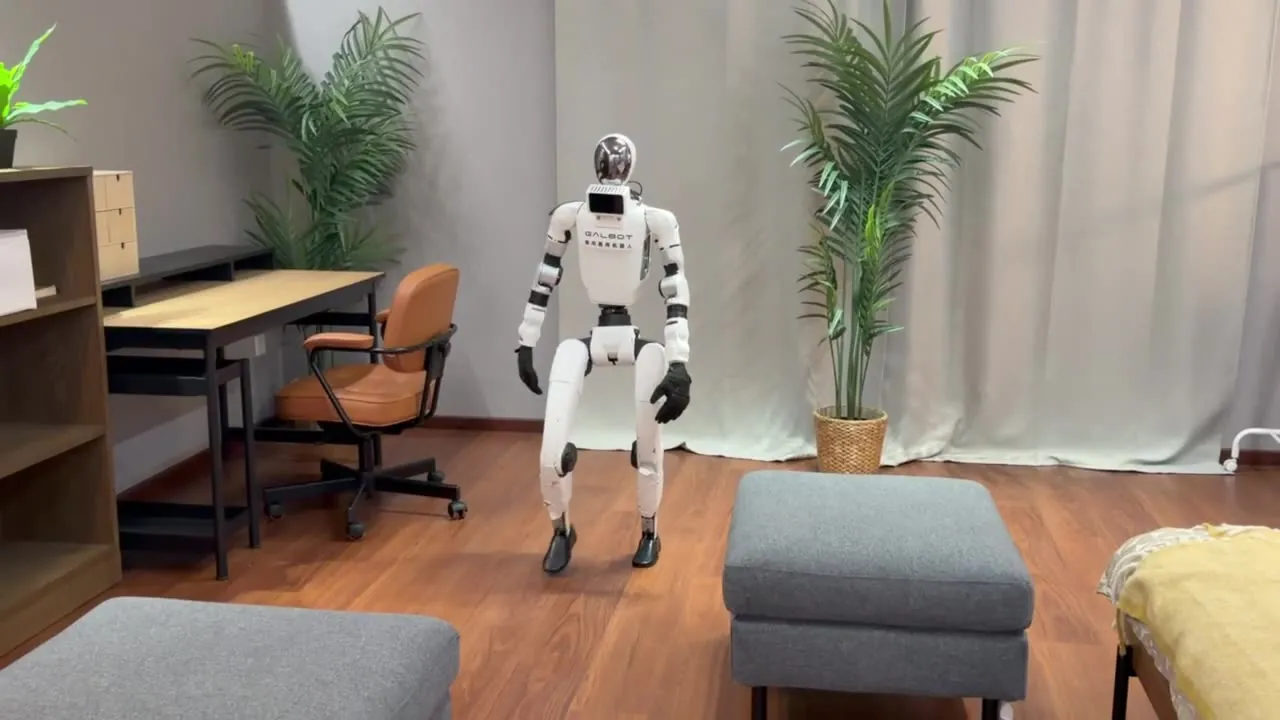 Main video · 3:00
Abstract
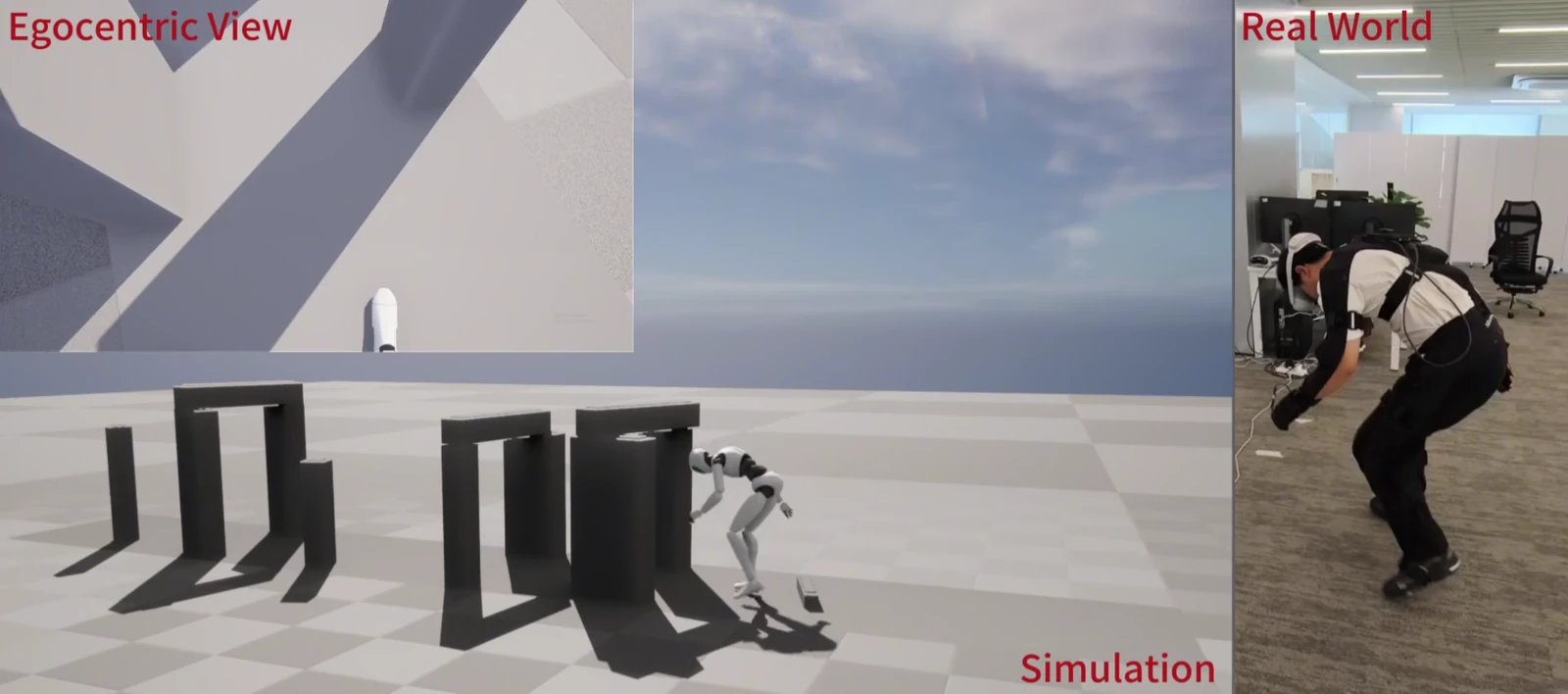
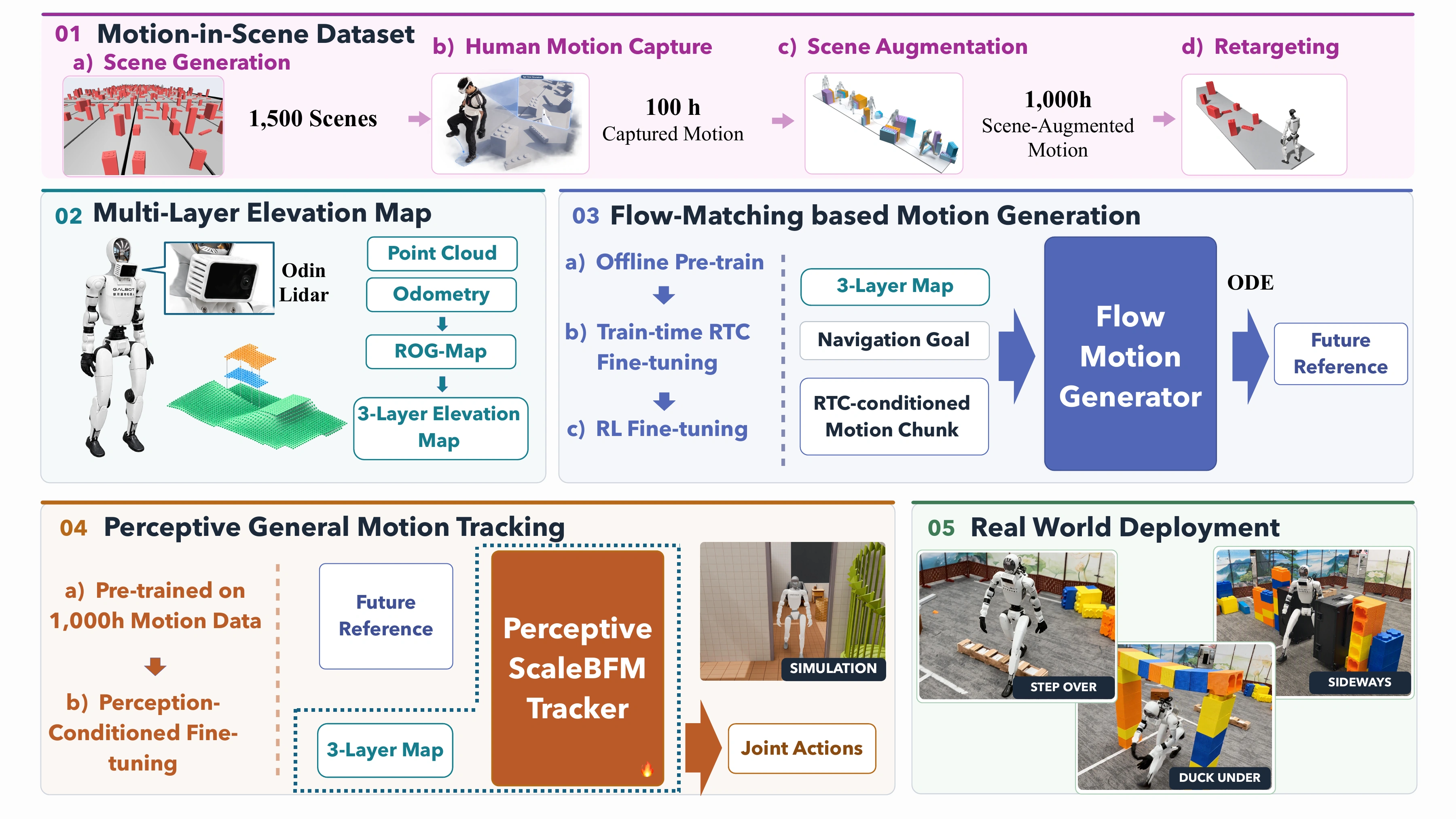
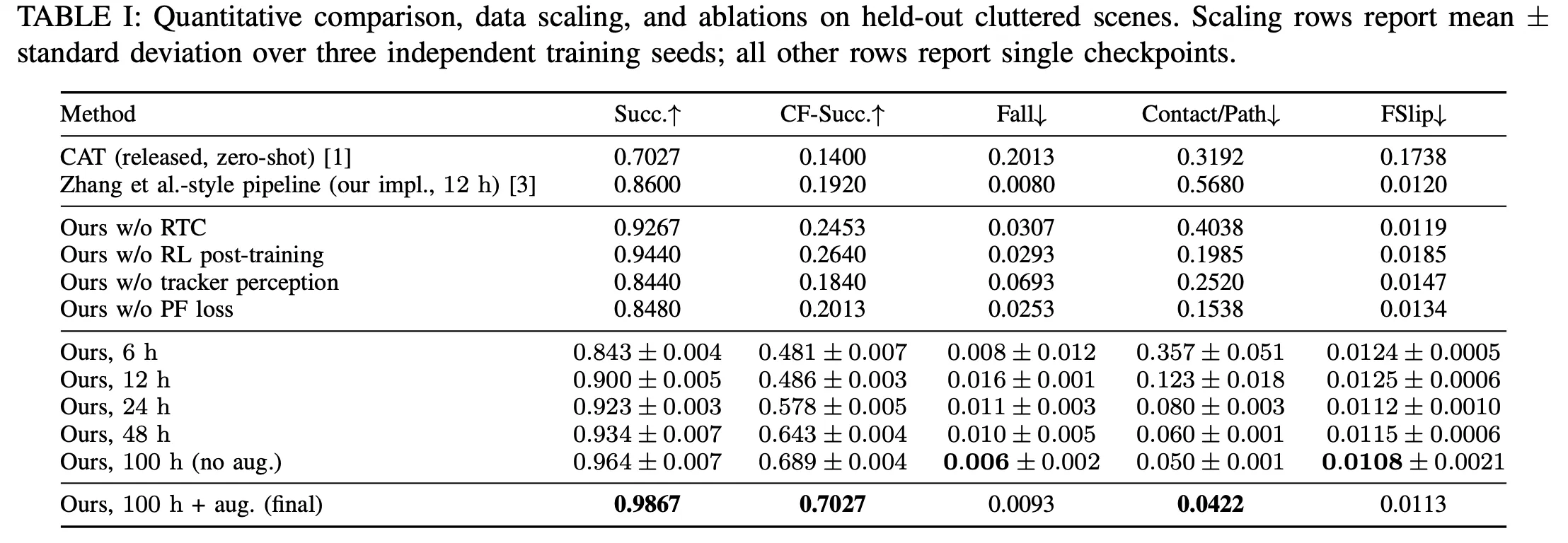
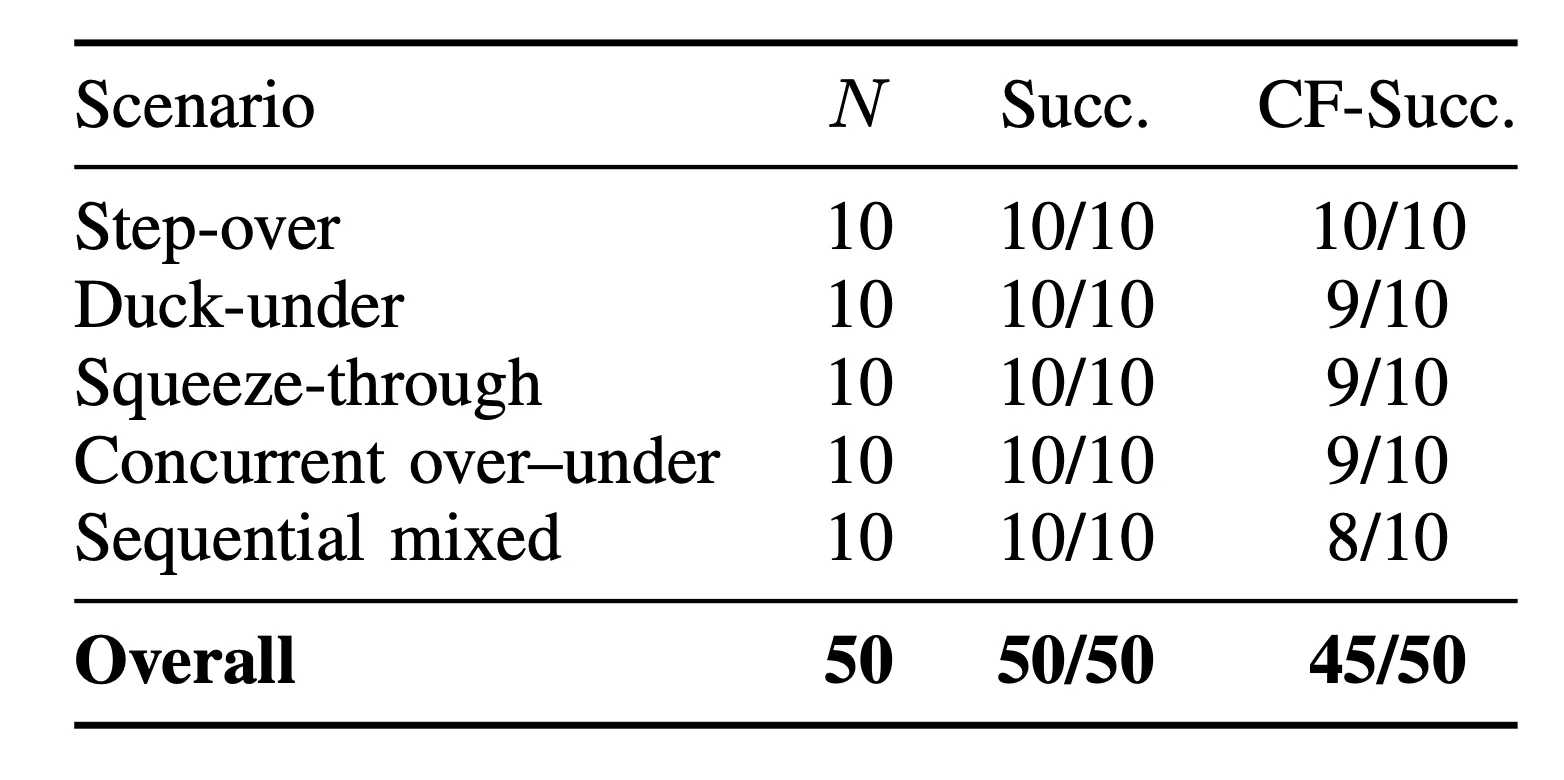
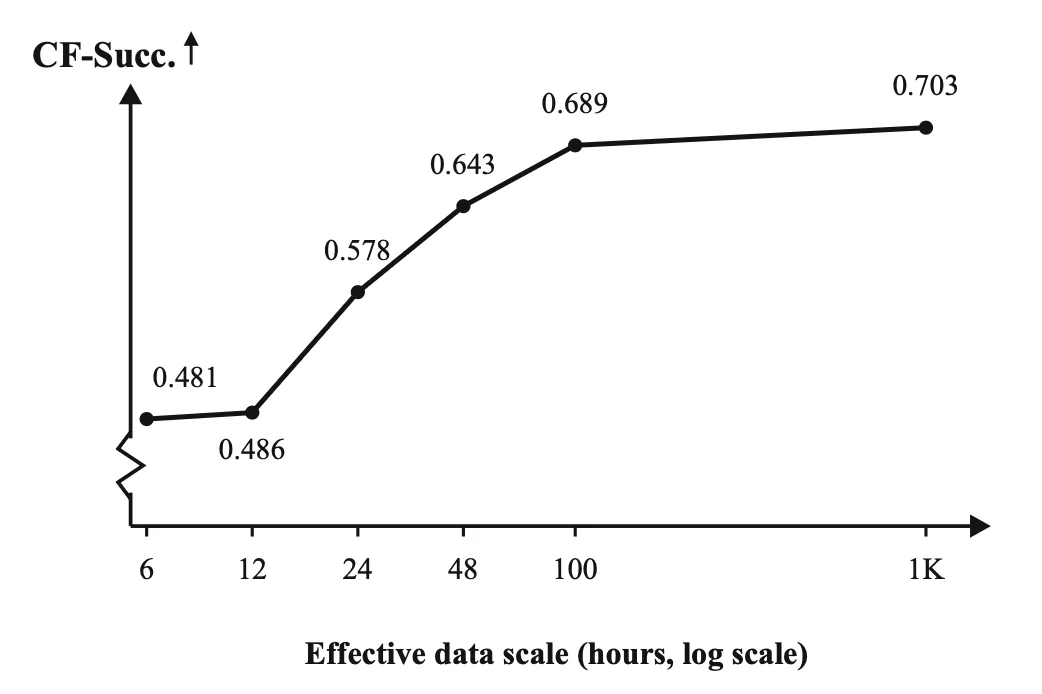
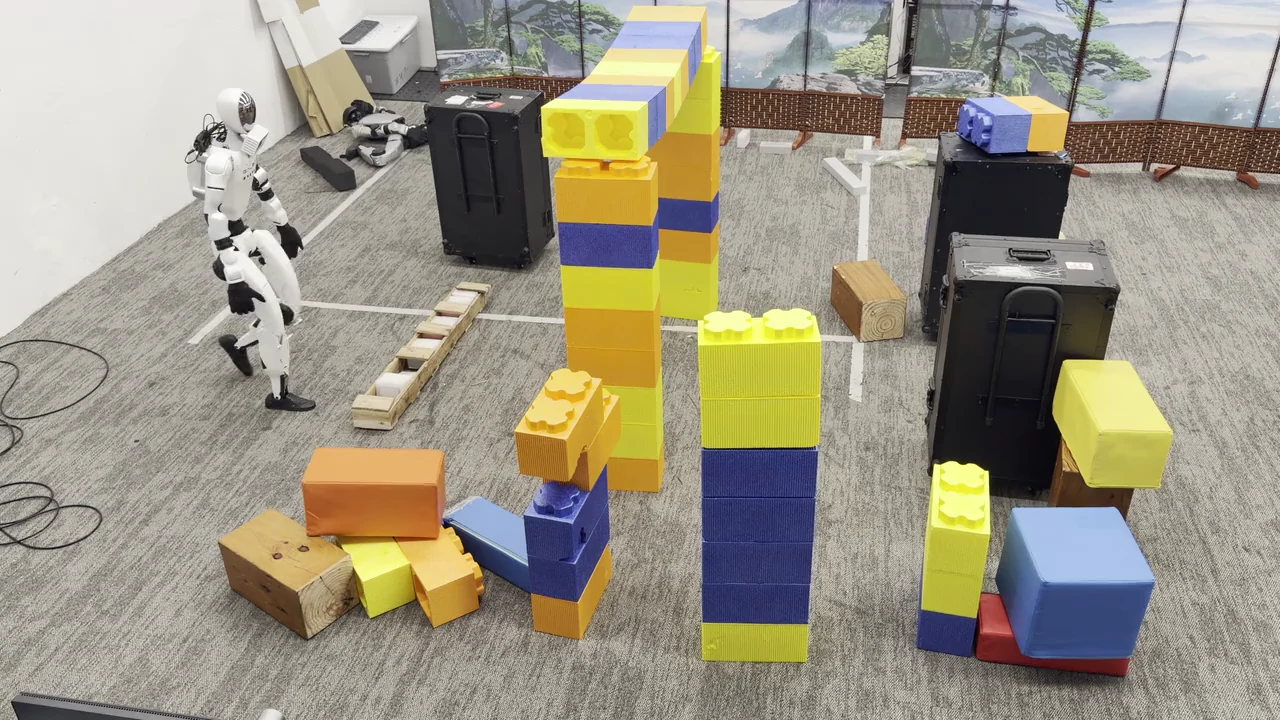
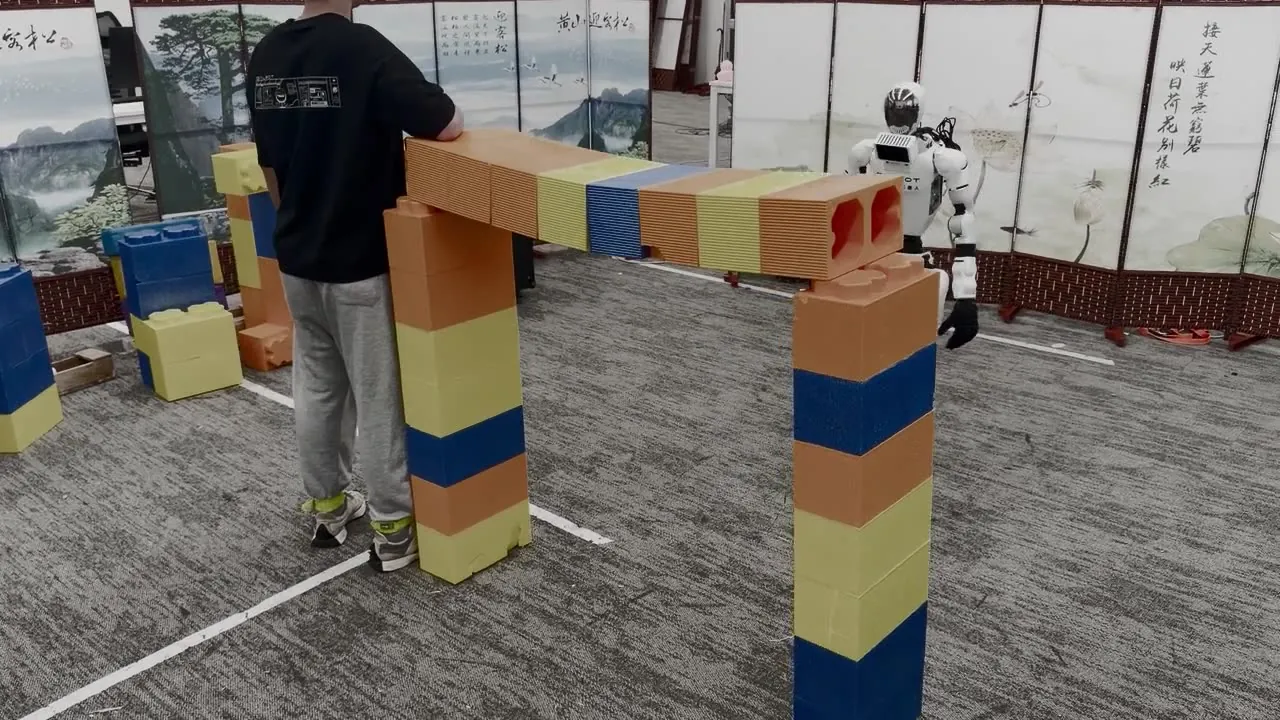
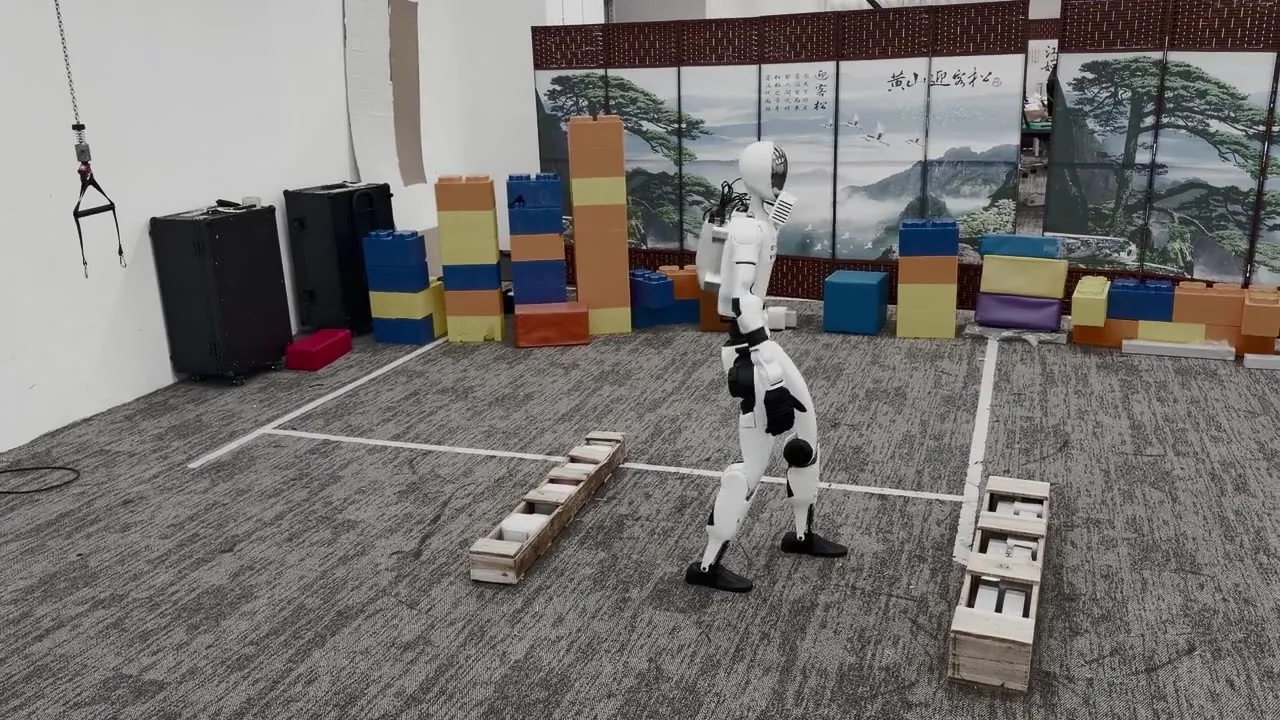
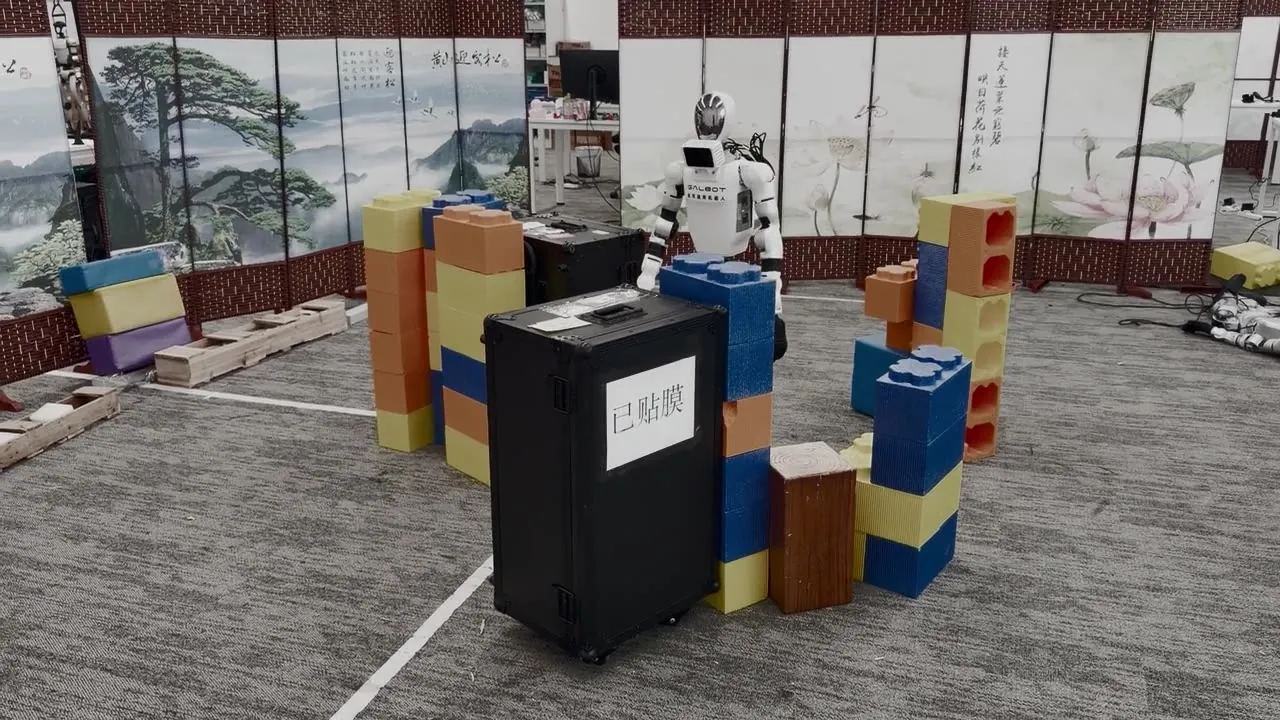
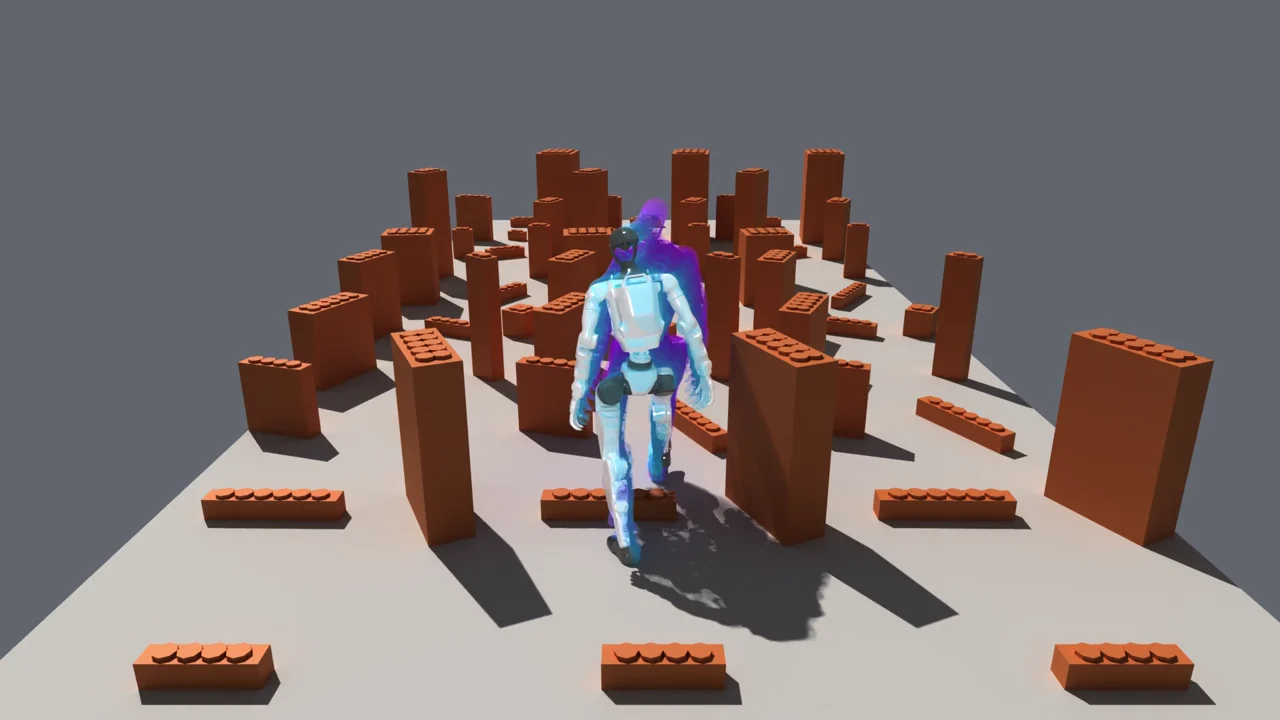
We present PASSAGE, a perception-conditioned planner–tracker framework for humanoid traversal. Using virtual reality and inertial motion capture, we collect 100 h of scene-aligned human motion across 1,500 cluttered scenes. A conditional flow-matching planner generates short-horizon references from motion history, a local destination, and a robot-centric multi-layer elevation map, while a perceptive whole-body tracker executes them at 50 Hz with geometric feedback. Real-time chunking promotes inter-chunk consistency, and planner-side RL post-training under the frozen tracker further improves closed-loop performance. Without skill annotations or obstacle-specific policies, one planner–tracker pair selects and composes traversal behaviors across unseen geometries. In simulation, component ablations quantify the contribution of each stage. Across three independent training seeds, scaling captured data from 6 to 100 h increases mean contact-free success from 48.1% to 68.9% on held-out scenes, while the final model with validated scene augmentation reaches 70.3%. The fully onboard system integrates egocentric 3D LiDAR perception, online occupancy mapping, 6.25-Hz planning, and 50-Hz control on a Jetson AGX Orin; tests across 50 unseen physical layouts demonstrate traversal without prebuilt maps or offboard computation.
Long Horizon Office Rollout
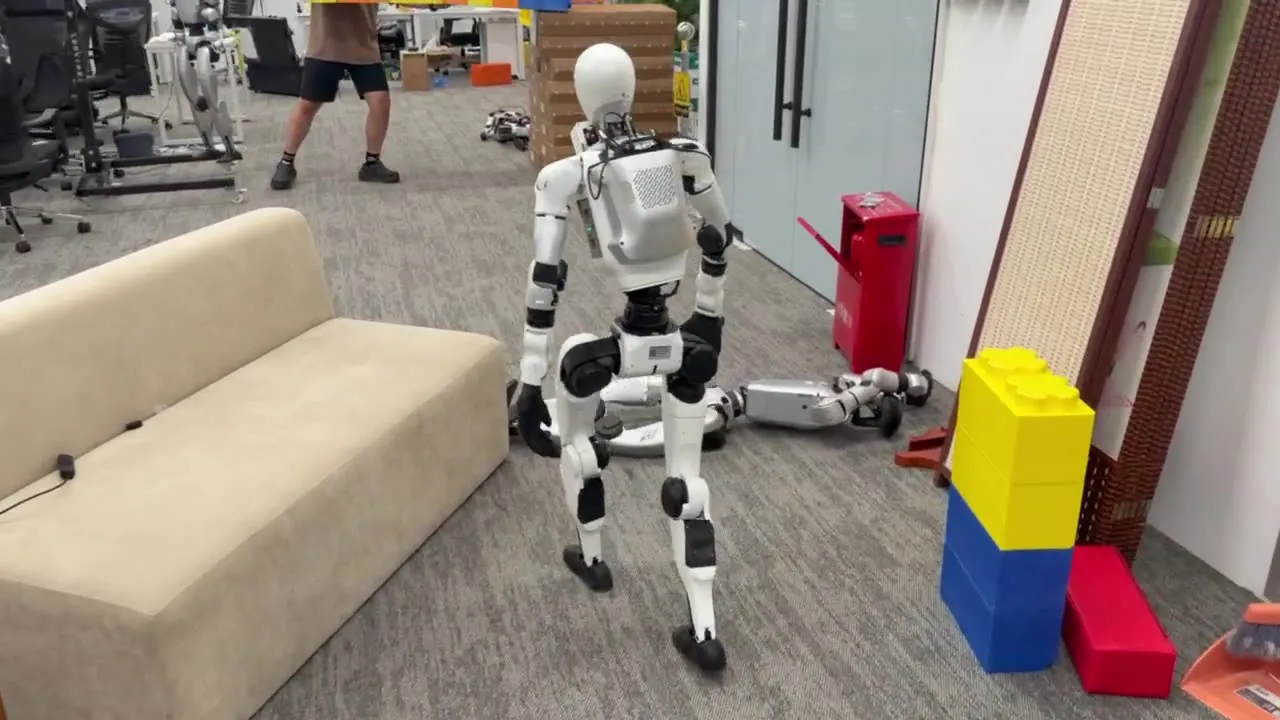 Office rollout · 0:39
Method
Quantitative Results
Data Collection
Evaluation
ClutterRollout
Single Skill
Simulation
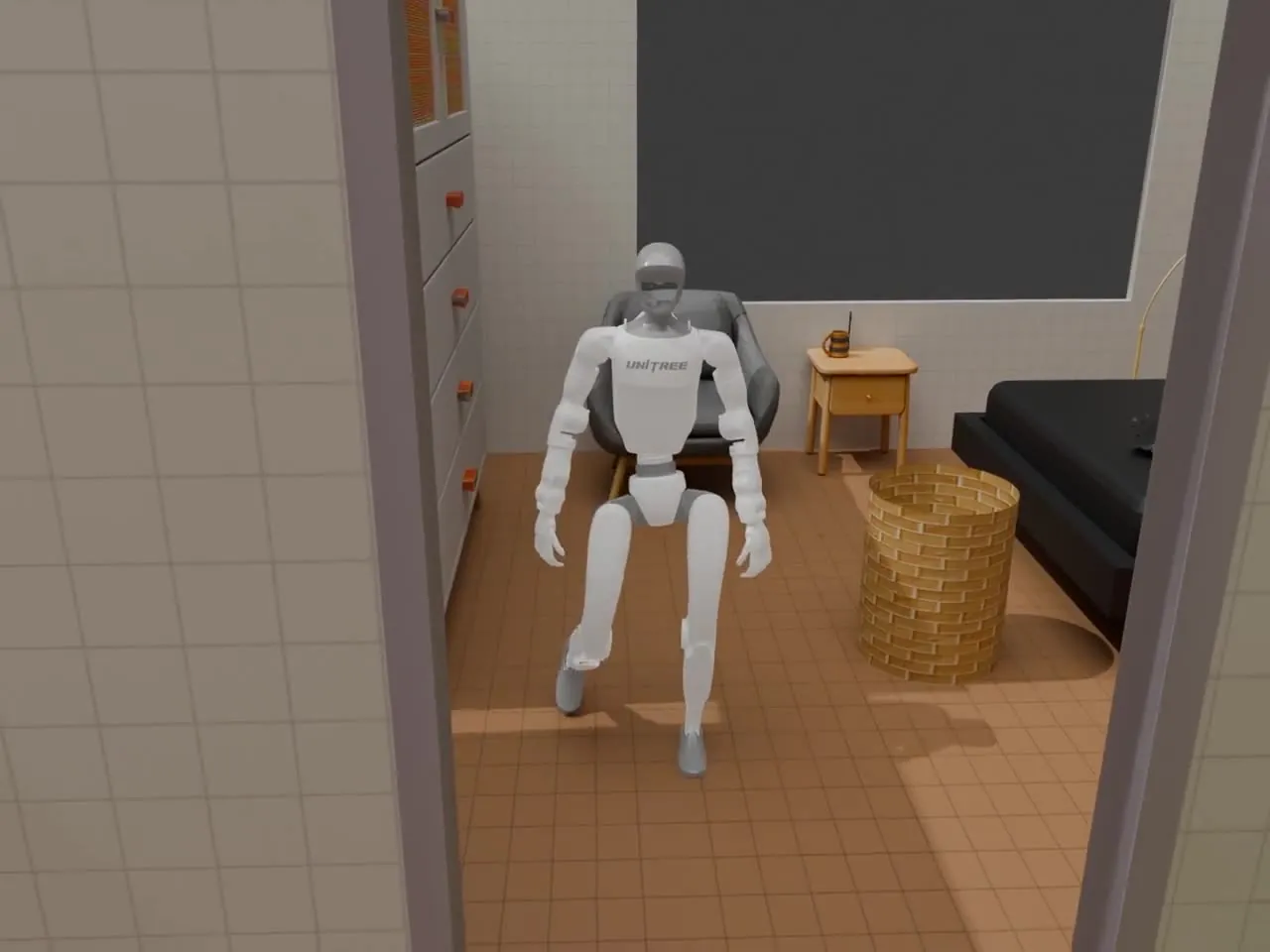
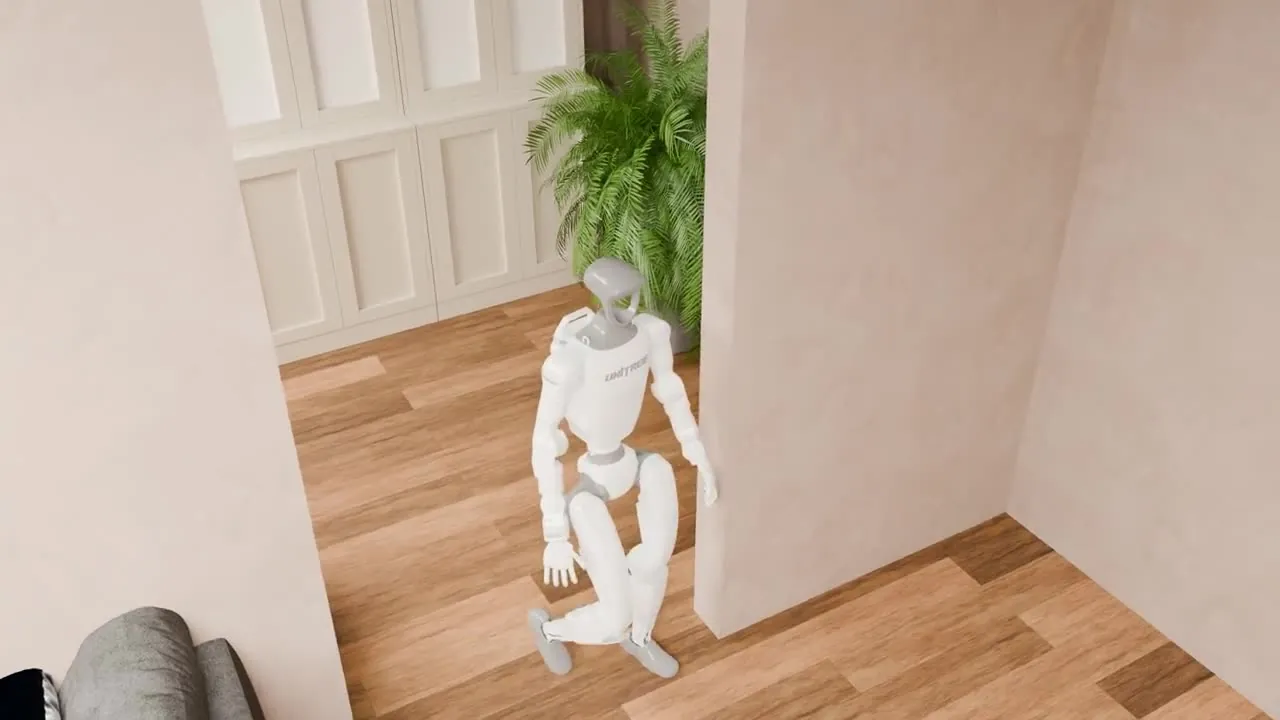
Indoor Scene
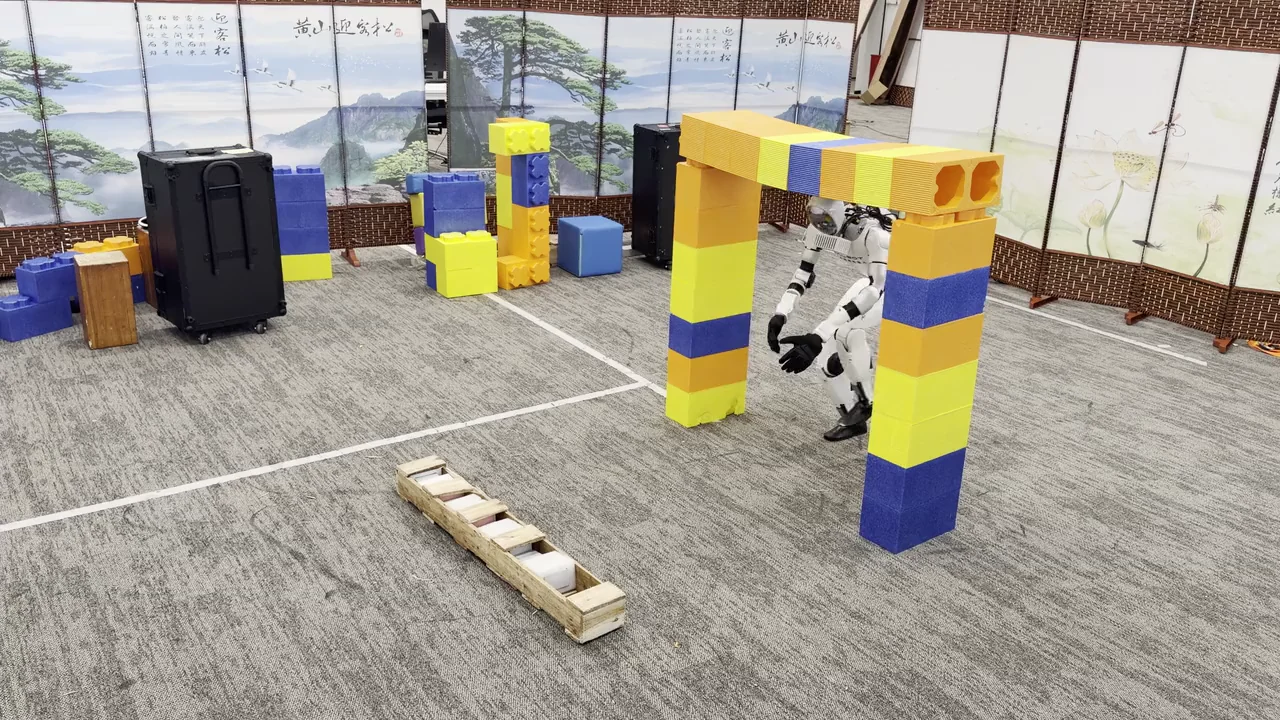
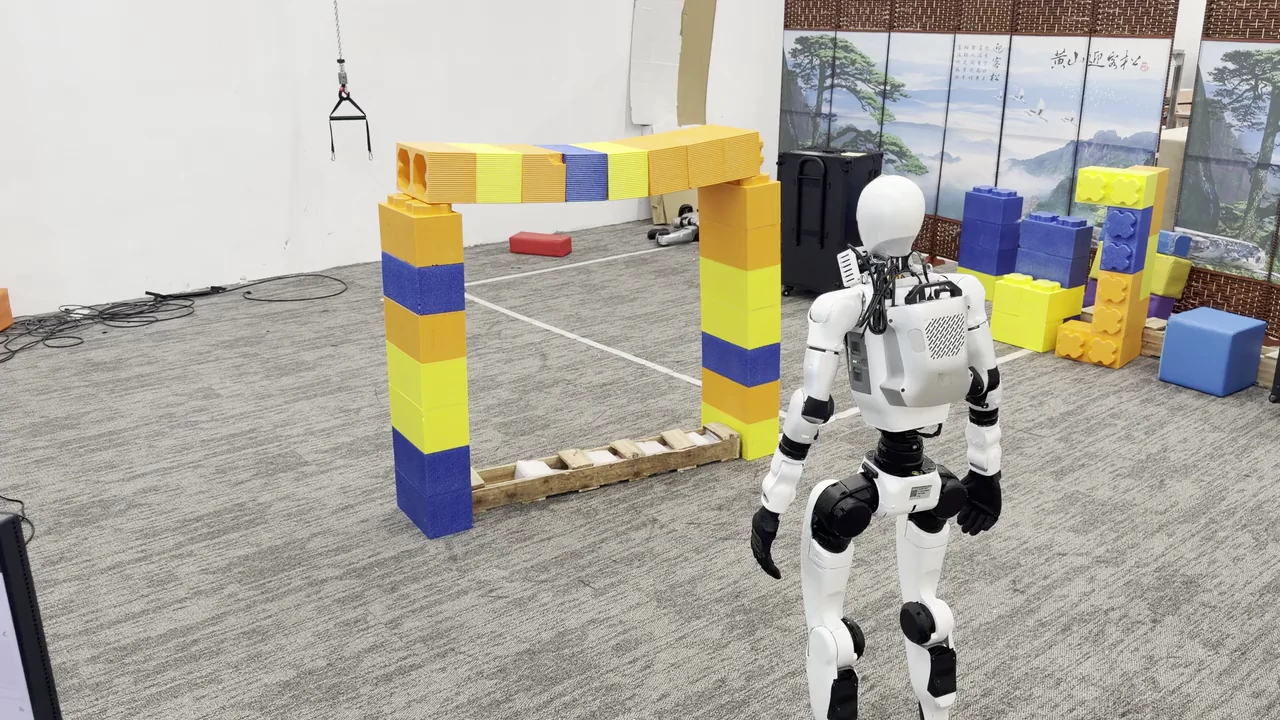
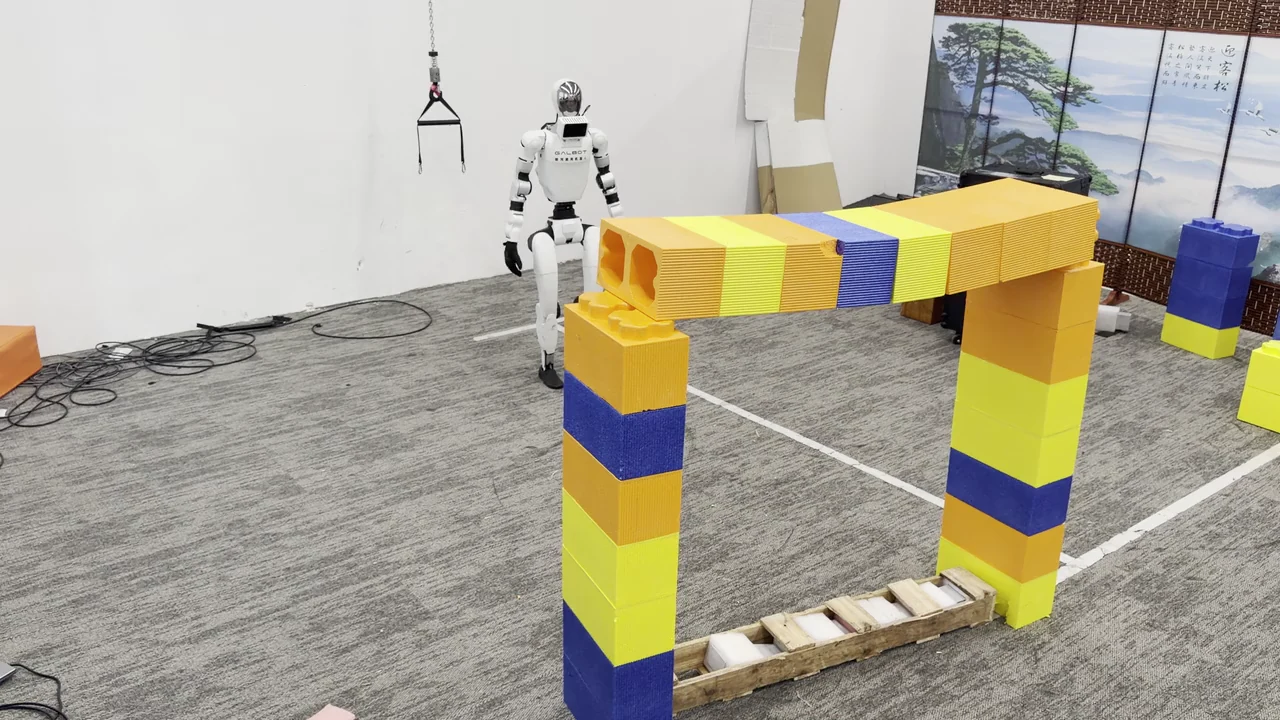
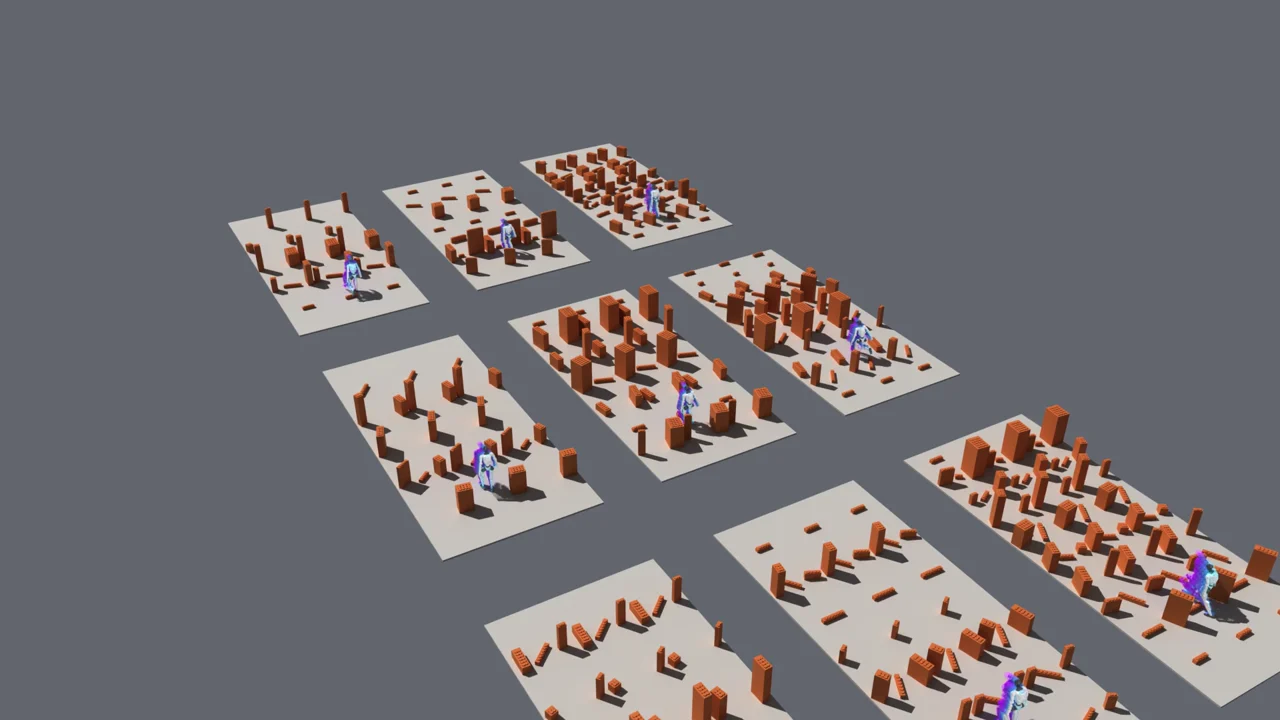
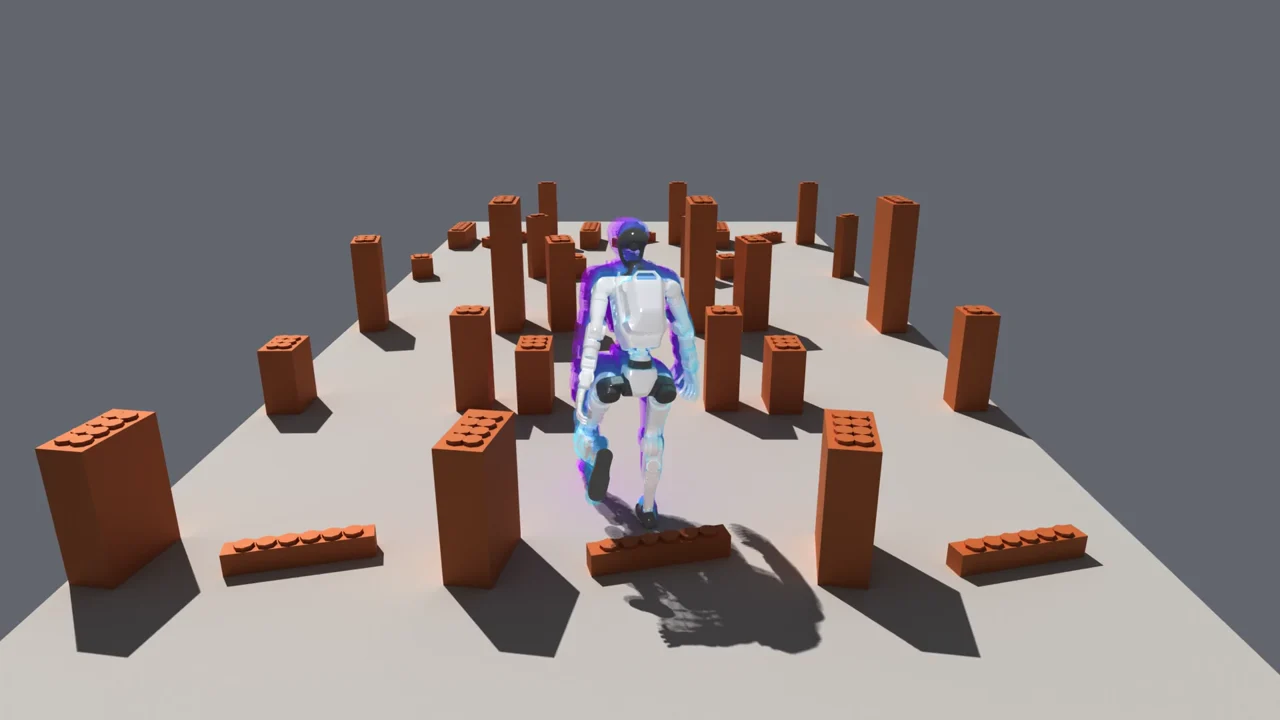
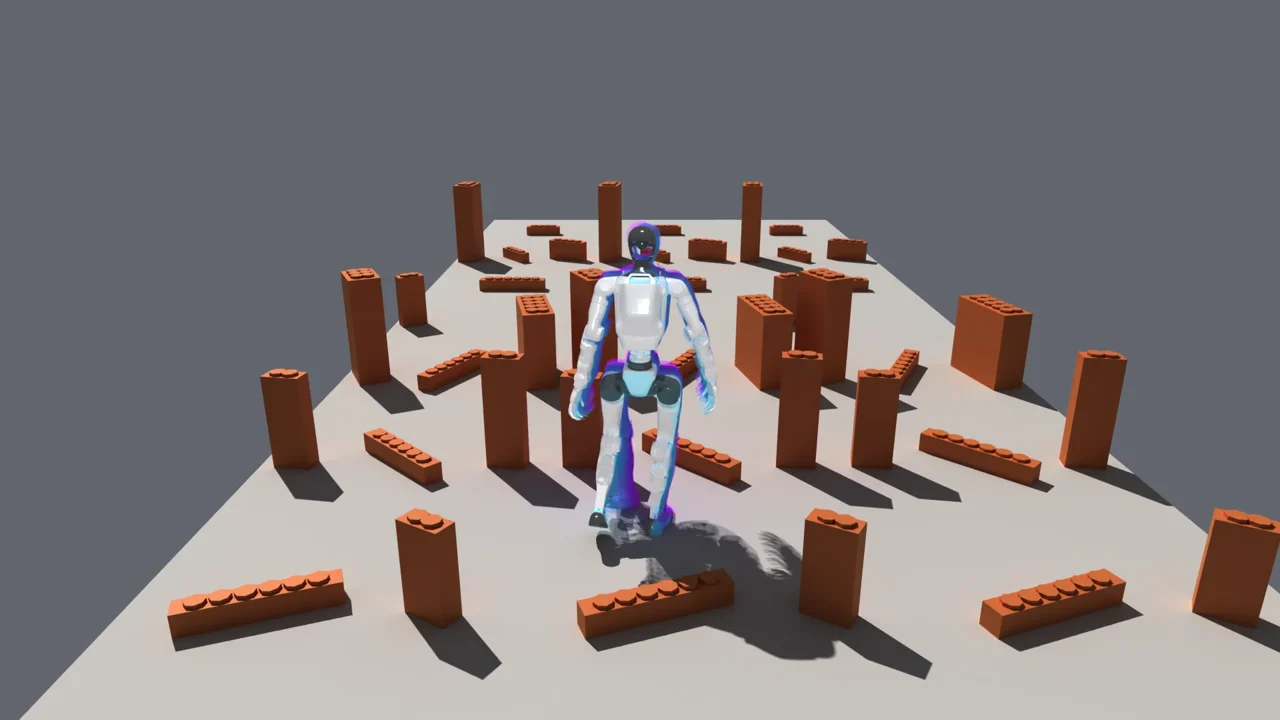
LEGO Rollout
Citation
@misc{ma2026passagescalingscenealignedmotion,
  title         = {PASSAGE: Scaling Scene-Aligned Motion Learning for Perceptive Humanoid Traversal in Cluttered Environments},
  author        = {Yuxuan Ma and Zicheng Zeng and Chunlin Peng and Zhoujian Li and Zetong Zhao and Zhikai Zhang and Yunrui Lian and Han Xue and Sikai Liang and Weiyi Zhu and Mulin Chen and Chenghuai Lin and Jiayu Zeng and Yanwei An and Songan Zhang and Jiayuan Gu and Jilong Wang and Jingbo Wang and He Wang and Li Yi},
  year          = {2026},
  eprint        = {2609.18732},
  archivePrefix = {arXiv},
  primaryClass  = {cs.RO},
  url           = {https://arxiv.org/abs/2609.18732}
}